Key takeaways
- Start with your display: The monitor you own dictates the GPU you need. A 1080p 144Hz screen pairs perfectly with an RTX 5060 or 5060 Ti, while 1440p wants an RTX 5070 and true 4K calls for an RTX 5080 or 5090.
- Understand CPU roles: For pure gaming, AMD’s cache-heavy X3D chips extract the most frames, but a strong Core i9 like the 14900HX pulls double duty if you also edit video or run heavy multitasking workloads.
- Do not skimp on memory: 16GB of DDR5 runs everything today, yet 32GB is the more sensible buy in 2026 and costs little extra while smoothing out streaming and open-world titles.
- Look past the first SSD: A single 1TB NVMe drive vanishes quickly, so favour builds with 2TB or confirmed spare M.2 slots, keeping PCIe 4.0 speeds as the baseline for fast load times.
- Judge the platform, not just the sticker: Gold-rated PSUs with wattage to spare, 360mm liquid cooling, and modern Wi-Fi separate a system engineered to endure from one assembled to a price ceiling.
What's inside
The prebuilt gaming PC market in 2026 rewards shoppers who do a little homework, and punishes those who chase headline specs alone. This is a year of genuinely great hardware: NVIDIA’s RTX 50-series has trickled all the way down to affordable tiers, AMD’s X3D processors keep rewriting the gaming performance charts, and Intel’s latest Core chips make short work of both play and productivity. Yet two towers with the same graphics card can behave very differently depending on cooling, memory, and how well the vendor balanced the parts. The goal of this guide is to cut through that noise.
A useful way to frame the decision is to think in terms of bottlenecks. A powerful GPU choked by a weak processor, thin RAM or a cramped cooler will never reach its potential, while a well-matched system runs quieter, cooler and faster than its spec sheet suggests. Throughout this roundup we have favoured builds where the components complement one another, because that harmony is what separates a machine that feels fast on day one from one that still feels fast years later. Keep that principle in mind as you weigh the options and you will rarely overpay for a number that never translates into smoother gameplay.
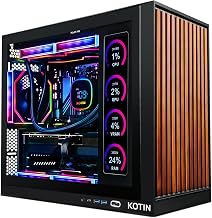
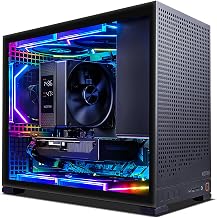
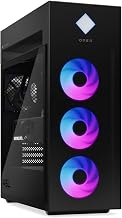
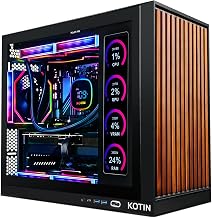
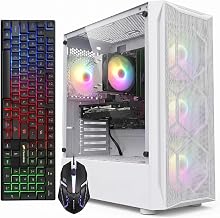
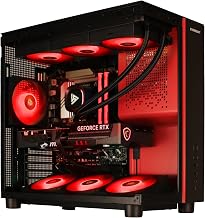
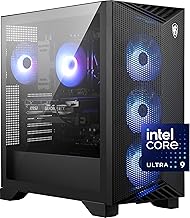
We have assembled a lineup that covers every serious buyer, starting with approachable 1080p machines such as the CyberPowerPC Gamer Xtreme with its RTX 5060 and the Thermaltake Quartz. From there it steps up through the KOTIN RTX 5060 Ti desktop and the versatile Core i9 RTX 5060 Ti workstation, on to the KOTIN and STORMCRAFT Falcon RTX 5070 systems for confident 1440p play, and finally to the STORMCRAFT Phantom RTX 5080 and the HP OMEN 45L RTX 5090 for those who refuse to compromise at 4K. Each one ships fully built and tested, so the only thing left for you to do is plug in and play.
As an Amazon Associate we earn from qualifying purchases.


⚡ Save on Your Next PC — Amazon Prime
Prime members get fast free shipping on the systems above, plus early access to Prime Day & Black Friday PC deals. New members get a 30-day free trial.
Watch: Best Prebuilt Gaming PC 2026: Complete Buyer’s Guide by GPU, Resolution & Budget — Video Review
How to Choose a Prebuilt Gaming PC in 2026
- Start with your display: The monitor you own dictates the GPU you need. A 1080p 144Hz screen pairs perfectly with an RTX 5060 or 5060 Ti, while 1440p wants an RTX 5070 and true 4K calls for an RTX 5080 or 5090.
- Understand CPU roles: For pure gaming, AMD’s cache-heavy X3D chips extract the most frames, but a strong Core i9 like the 14900HX pulls double duty if you also edit video or run heavy multitasking workloads.
- Do not skimp on memory: 16GB of DDR5 runs everything today, yet 32GB is the more sensible buy in 2026 and costs little extra while smoothing out streaming and open-world titles.
- Look past the first SSD: A single 1TB NVMe drive vanishes quickly, so favour builds with 2TB or confirmed spare M.2 slots, keeping PCIe 4.0 speeds as the baseline for fast load times.
- Judge the platform, not just the sticker: Gold-rated PSUs with wattage to spare, 360mm liquid cooling, and modern Wi-Fi separate a system engineered to endure from one assembled to a price ceiling.
Browse Our Prebuilt Gaming PC Guides
Ready to narrow things down? The specialised guides below zoom in on individual graphics cards, resolutions, budgets and creator workloads so you can compare the strongest options in each category without wading through everything at once.
- Best Prebuilt Gaming PC with RTX 5060
- RTX 5060 Ti prebuilts
- RTX 5070 prebuilt gaming PCs
- RTX 5070 Ti builds
- RTX 5080 prebuilts
- RTX 5090 flagship rigs
- best 1440p prebuilt gaming PCs
- 1440p RTX 5070 build
- best 4K prebuilt gaming PCs
- prebuilt PC for streaming
- prebuilt PC for video editing
- best RTX 5070 prebuilt under $1500
- RTX 5070 vs RTX 5060 Ti
By Budget
Money talks, so let us be concrete. Around $1,300 the CyberPowerPC RTX 5060 delivers dependable 1080p and light 1440p performance, making it a strong entry point. Between $1,400 and $1,500 the KOTIN RTX 5060 Ti and the Core i9 RTX 5060 Ti hybrid give you extra CPU muscle for creation as well as gaming. Step up to roughly $1,900 for the RTX 5070 systems that own the 1440p bracket, and budget $3,000 or more for the RTX 5080 Phantom or the RTX 5090 OMEN if you want maximum 4K settings with room to grow. Buying one tier above your minimum need is usually the smartest long-term move.
One nuance worth flagging is how software changes the math. NVIDIA’s DLSS and frame-generation features stretch a card’s real-world reach well beyond its raw horsepower, which means an RTX 5060 Ti or RTX 5070 can punch above its resolution class in supported titles. That makes the value tiers even more attractive, because you are effectively buying tomorrow’s performance through driver and game updates rather than paying for it in silicon today. When you compare two systems at similar prices, weigh the CPU pairing and cooling carefully, since those are the parts that determine whether the GPU can sustain its peak rather than throttle under a long session.
Frequently Asked Questions
Is a prebuilt cheaper than building my own PC?
In 2026 the gap is minimal at the mid-range and often favours prebuilts once you factor in warranty coverage, professional cable management and the time saved. DIY still wins on the absolute high end if you hunt component deals.
Do I need an RTX 5080 or 5090 to enjoy 4K?
Not necessarily. An RTX 5070 can manage 4K in many titles with DLSS enabled, but for consistently high frame rates at maxed settings the RTX 5080 or RTX 5090 remain the reliable choices.
Which CPU is best for a gaming and editing hybrid?
A high-core Intel Core i9 such as the 14900HX in one of these towers balances gaming with video editing and rendering nicely. For pure gaming, an AMD X3D chip still edges ahead on frame rates.
Will these prebuilts handle VR and streaming?
Yes. Any RTX 5060 Ti tier and above comfortably drives modern VR headsets, and with 32GB of RAM you can stream to Twitch or YouTube while playing without a noticeable performance hit.
Final Verdict
The right prebuilt gaming PC in 2026 comes down to honest self-assessment. Everyday gamers and newcomers get tremendous value from the CyberPowerPC RTX 5060 or the Thermaltake build, while the KOTIN RTX 5060 Ti and RTX 5070 systems represent the smart mainstream choice for anyone gaming at 1440p. Creators who game will appreciate the Core i9 RTX 5060 Ti tower, and dedicated 4K enthusiasts should aim for the STORMCRAFT Phantom RTX 5080 or the HP OMEN 45L RTX 5090. Nail down your resolution and budget, then use the targeted guides above to lock in the exact system that suits your play.